From the archive
Omani Citizens Convicted in Election Interference Case
Three Omani citizens convicted of vote buying, election influence, and online defamation. Sentenced to prison and fines in Muscat.
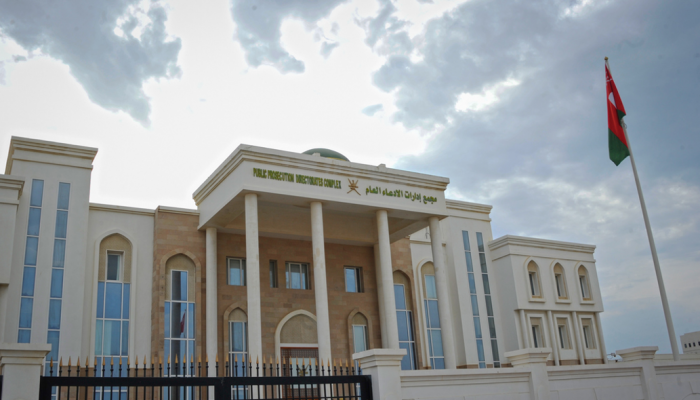
Three Omani citizens have been convicted and sentenced to prison terms and fines in a case involving vote buying, election influence, and online defamation, according to the Public Prosecution. The Primary Court of Muscat (Criminal Circle) found Abdullah Abdulrahman Mohammed, Yosef Ahmed Shaheen, and Tarik Ibrahim Hassan guilty. Yosef Ahmed Shaheen and Tarik Ibrahim Hassan were convicted of vote buying, intended to influence the outcome of the 10th Shura Council elections. Abdullah Abdulrahman Mohammed was found guilty of using information technology to insult another person, an offense punishable under Article 16 of the Law on Combating Cybercrime.
Sentencing Details and Charges
Abdullah Abdulrahman Mohammed received a sentence of one year in prison and a fine of OMR1,000. The court suspended the remainder of his prison sentence, mandating that he serve one month. Yosef Ahmed Shaheen and Tarik Ibrahim Hassan were each sentenced to one year in prison and fined OMR5,000. However, the court partially suspended the sentence for Tarik Ibrahim Hassan, who will serve six months in prison and pay a fine of OMR1,000. The court further ordered that the sentences against Yosef Ahmed Shaheen run concurrently, meaning only the most severe penalty would be served.
Court documents indicated that Abdullah Abdulrahman Mohammed and Yosef Ahmed Shaheen published a video on social media. The video contained insulting remarks about a candidate in the 10th Shura Council elections, questioning his eligibility and ability to serve as a council member in a manner that harmed his reputation. Additionally, messages exchanged between Yosef Ahmed Shaheen and Tarik Ibrahim Hassan revealed an agreement to buy votes in favor of the second defendant, a move that undermined the integrity of the electoral process and the freedom of voting.
Appeals and Final Verdict
On February 16, 2026, the Muscat Court of Appeal addressed the convictions of Abdullah Abdulrahman Mohammed, Yosef Ahmed Shaheen, and Tarik Ibrahim Hassan. The appellate court upheld the initial convictions against all three individuals. However, the court opted to suspend the prison sentences that had been imposed by the Primary Court of Muscat (Criminal Circle) for all appellants.
The case subsequently moved to the Supreme Court. On July 7, 2026, the Supreme Court formally accepted the appeal presented by the defendants. Despite accepting the appeal in form, the Supreme Court ultimately rejected it on its merits. This decision by the Supreme Court rendered the convictions against Abdullah Abdulrahman Mohammed, Yosef Ahmed Shaheen, and Tarik Ibrahim Hassan final, concluding the legal process for the election interference case.
Court Orders and Publication
The Supreme Court's final decision included an order for the publication of the court's ruling. This directive mandates that the details of the verdict concerning Abdullah Abdulrahman Mohammed, Yosef Ahmed Shaheen, and Tarik Ibrahim Hassan be made public. Such orders are typically issued in cases where there is a public interest in the disclosure of judicial outcomes, particularly those involving electoral integrity. The publication serves as a formal record and a deterrent, reinforcing the legal consequences for actions that undermine the electoral process. This step concludes the legal proceedings, ensuring transparency regarding the convictions for vote buying, election influence, and online defamation initially brought forward by the Public Prosecution.