From the archive
Oman Accelerates Road Infrastructure Development with 61 Projects Underway
Oman is accelerating road infrastructure development with 61 projects underway, aiming to boost connectivity and economic growth.
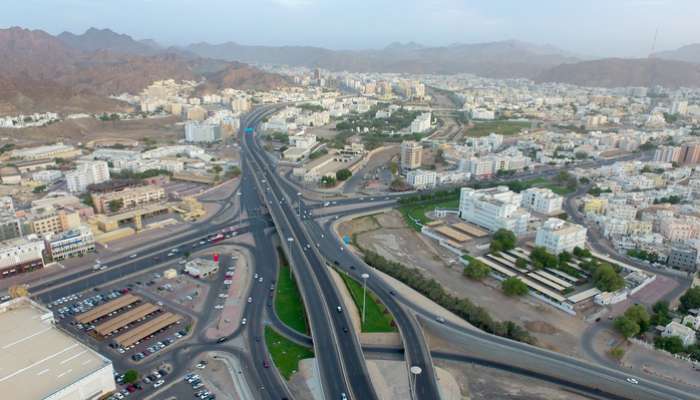
Oman is advancing its road infrastructure development with 61 projects currently under execution across the Sultanate. These initiatives encompass the construction of new roads, rehabilitation of existing routes, and completion of major strategic corridors. Dr. Saif bin Said Al Sinani, Director General of Planning at the Ministry of Transport, Communications and Information Technology, affirmed that "the projects include the construction of new roads, rehabilitation of existing routes and completion of major strategic corridors." Major road projects are being implemented across the governorates of Dhofar, North and South Al Sharqiyah, Al Dakhiliyah, Al Buraimi, Al Dhahirah, and Al Batinah.
Key Projects Nearing Completion
Twenty-two road infrastructure projects in Oman had surpassed 70 percent completion by mid-2026. Several projects were completed or opened during the first half of 2026, including the dualisation of Sultan Taimur Street and Al Farouq Street. The Itin Tunnel intersection also opened, alongside road paving in Muqshin and the rehabilitation of the Tawi Atir–Wadi Rakah–Jabjat road. Additionally, the Al Aflaj road in Al Mudhaibi was completed, as were road repairs in areas affected by recent tropical weather events.
Looking ahead, several strategic projects are expected to be completed before the end of 2026. These include the Turki bin Saeed Road, which links Al Kamil and Sur, and the rehabilitation of Sultan Thuwaini bin Saeed Road between Bidbid and Nizwa. Other projects in this category are the Harweeb–Al Mazyouna–Mitan Road, Al Mughsail Bridge, Saih Al Khairat–Shisr Road, Al Maamoura–Taqah Road, and the coastal road connecting Rakhyut and Dhofar.
Parts of several ongoing projects are also scheduled to open during the second half of 2026. These include sections of the Sohar Free Zone Link, the road serving Al Namaa Poultry Company in Dhank, and portions of the Al Hazm–Al Rustaq Road. The Gas Company Roundabout–Bilad Sur dual carriageway and Sultan Taimur bin Faisal Road are also slated for partial opening, along with the Izki–Nizwa dual carriageway and the Al Abila–Al Fayyad Road. Separately, the Sultan Faisal bin Turki Road in Musandam, which links Dibba, Lima, and Khasab, has exceeded 73 percent completion. In Muscat, upgrades include the redevelopment of Al Mouj Street and 18 November Street, involving road widening and the conversion of roundabouts into signal-controlled intersections.
Strategic Corridors Underway
New projects are being prepared under the Eleventh Five-Year Plan, encompassing the initial phase of the Empty Quarter dual carriageway in Al Dhahirah. These plans also include the completion of the Sant–Wadi Al A'la Road, road rehabilitation and flood protection works in Jabal Al Akhdar, and the paving of roads serving villages in North Al Sharqiyah. Tendering procedures are nearing completion for the 132-kilometer Sinaw–Mahout–Duqm Road, which will connect Mahout to the Special Economic Zone at Duqm. Concurrently, tendering procedures for the expansion of the Muscat Expressway are also close to finalization.
Work is progressing on the 400-kilometer Sultan Said bin Taimur Road, which traverses the route between Haima and Thumrait. Parts of the Sultan Said bin Taimur Road are expected to open during the first half of 2027. The full completion of the Sultan Said bin Taimur Road is targeted for the second half of 2028.
Maintenance and Funding
Oman has allocated over OMR 230 million for the ongoing maintenance and repair of its road network. These funds specifically cover periodic maintenance contracts, along with the rehabilitation of roads that have sustained damage from adverse weather conditions across the Sultanate. The financial commitment aims to ensure the longevity and safety of existing infrastructure while addressing immediate repair needs caused by natural events. This allocation supports full efforts to maintain the country's extensive road system, supplementing the significant investments in new construction and strategic corridor development.