From the archive
Oman's Honey Production Soars Amidst Regional Trade Activity
Oman's honey production jumped from 623,313 kg in 2023 to 934,443 kg in 2025, highlighting significant growth in the Sultanate's apiculture sector.
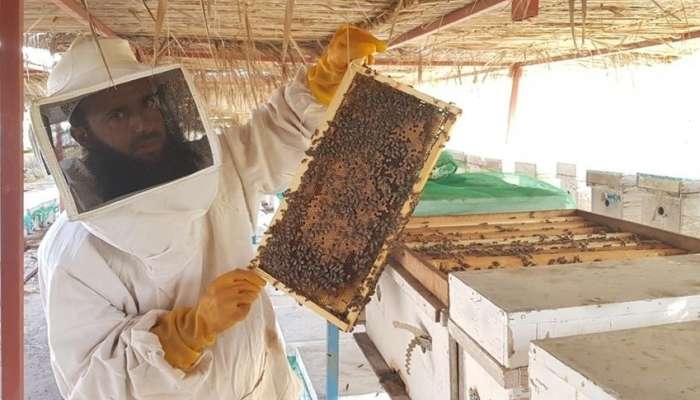
Oman’s honey production has seen a significant increase, rising from 623,313 kg in 2023 to 765,054 kg in 2024 and further to 934,443 kg in 2025. These figures were provided by the National Centre for Statistics and Information (NCSI), indicating a consistent growth trend in the Sultanate's apiculture sector over the past three years. This significant rise in output shows a strong expansion in honey production across the Sultanate. The data notes a strong expansion in honey output, contributing to regional trade activity and showcasing the growing importance of beekeeping to the national economy.
Production Growth Detailed
North Al Sharqiyah Governorate was Oman's largest honey-producing region in 2025, yielding 248,547 kg. This made it the top contributor to the national honey yield. Al Dakhiliyah governorate followed with 176,428 kg of honey in the same year, demonstrating its substantial role in the sector. North Al Batinah contributed 158,097 kg, while South Al Sharqiyah produced 128,120 kg. Al Dhahirah's production reached 97,818 kg, and Dhofar recorded 64,216 kg of honey in 2025, further diversifying the geographical spread of honey production. Cumulatively, these governorates represent the core of Oman's burgeoning apiculture industry.
Across the industry, 47 establishments were engaged in beekeeping and the production of honey and beeswax, indicating a vibrant and active sector. Two facilities specifically focused on producing black honey (molasses) and sugar honey, catering to diverse market demands. The number of beekeeping units remained stable at 12 throughout the 2023–2025 periods, reflecting a consistent operational base. Similarly, the number of research units in the sector remained unchanged at two during the same timeframe, showing ongoing efforts in apiculture development and innovation. The United Arab Emirates supported the industry by exporting wooden beehives to Oman, valued at OMR 5,793, facilitating the expansion of beekeeping operations.
Honey Trade Landscape
The Sultanate of Oman's imports of strained natural honey reached a total value of OMR 2.131 million, indicating a significant demand for this product within the country. The People’s Republic of China was the leading importer of strained natural honey, accounting for OMR 541,881 of the total. India followed, importing strained natural honey worth OMR 417,333, establishing itself as another key source. Meanwhile, the Kingdom of Saudi Arabia imported OMR 406,940 worth of the product. Australia’s imports of strained natural honey reached OMR 234,102, and the United Arab Emirates imported OMR 229,355, noting the global reach of Oman's import partners.
Imports of natural honey in comb or containing pieces of comb amounted to OMR 42,941, showcasing a niche market for this specific type of honey. Türkiye ranked first among importers of honey in comb, with a value of OMR 19,657. Australia imported honey in comb worth OMR 17,556, and the United Arab Emirates imported OMR 3,251, demonstrating varied preferences across different markets. Imports of wooden beehives totaled OMR 15,629, key for supporting the local beekeeping infrastructure. Egypt was the leading exporter to Oman for these beehives at OMR 9,809, with the United Arab Emirates also contributing OMR 5,793.
Export Markets
The Sultanate of Oman exported strained natural honey valued at OMR 648,274, signifying its growing presence in international markets. Lebanon emerged as the primary destination for these exports, importing honey worth OMR 246,272, showing strong trade ties. Qatar was another significant market, receiving OMR 179,024 worth of strained natural honey from Oman, indicating strong regional demand. Jordan’s imports of Omani strained natural honey totaled OMR 118,018, further diversifying the export base. Further exports included OMR 55,247 to Kuwait and OMR 36,406 to the United Arab Emirates, collectively demonstrating Oman's expanding footprint in the global honey trade.